
Updated for 2026 — This article has been reviewed and updated with the latest recommendations.
The walls of your grow room play a bigger role in yield than most beginners realize. Light that bounces off reflective surfaces gets a second chance to hit your canopy, and that adds up over weeks of flowering. Poor wall coverage means wasted lumens, hot spots, and uneven growth. Here are eleven reflective materials ranked by how well they actually perform in a grow room setting.
1. Gorilla Grow Tent Liner (Replacement Panels)
If you already run a Gorilla tent, their replacement liner panels are the gold standard for interior reflectivity.
The diamond-pattern Mylar interior reflects up to 97% of light and diffuses it evenly across your canopy. You can also buy these panels separately and attach them to the walls of a custom grow room. About $30-60 per panel depending on size. The diamond pattern is important because it scatters light in multiple directions rather than creating hot spots like flat Mylar can.
2. Vivosun 6 Mil Mylar Film (Rolls)
Vivosun sells thick Mylar film in large rolls (25ft and 50ft lengths, 4ft wide) that you can cut and attach to any wall surface.
At 6 mil thickness, it is durable enough to handle without tearing and resists creasing better than thinner options. Reflectivity is around 95-97%. About $25 for a 25ft roll. Attach it with spray adhesive or double-sided tape. Keep it smooth and avoid wrinkles because creases create uneven light distribution. This is the most cost-effective way to line a large custom room.
3. HTGSupply Panda Film (Black/White Poly)
Panda film is white on one side and black on the other.
The white surface reflects about 90% of light, and the black side blocks any light from passing through. This is the go-to material for dividing rooms, creating partitions, or lining walls where you need light containment on both sides. The 6 mil thickness is tear-resistant. About $20 for a 10ft by 25ft roll. It does not reflect quite as well as Mylar, but it is much easier to work with and does not create hot spots.
4. Orca Grow Film
Orca film is a microfiber material that claims 94% reflectivity with superior light diffusion compared to Mylar. The key advantage is that it scatters light uniformly without creating intense reflection points. It is also mold-resistant and washable, which Mylar is not. About $50 for a 4ft by 25ft roll.
The price is higher than Mylar but the diffusion quality and durability make it worth considering for permanent setups. Many commercial growers have switched to Orca because of the even canopy coverage it provides.
5. Flat White Latex Paint
Do not overlook paint. Flat white (not semi-gloss, not satin) latex paint reflects about 85-90% of light and distributes it more evenly than almost any film material.
It is cheap, easy to apply, and you can paint over it for a fresh surface any time. No wrinkles, no tape, no hot spots. About $30 per gallon, which covers a typical small grow room. The key is using flat white, not glossy white. Gloss reflects light at angles that create hot spots, similar to Mylar problems. Flat white diffuses beautifully. This is the most underrated option on the list.
6.
AC Infinity Cloudlab Tent Interior
AC Infinity tents use a highly reflective interior lining that is thicker and more durable than most tent brands. If you are shopping for a new tent specifically for reflectivity, the Cloudlab series delivers some of the best interior reflectance in the consumer tent market.
The PARL lining is tear-resistant and easy to wipe clean. Prices range from $150 to $400 depending on tent size. You cannot buy the lining separately, but if you are in the market for a tent anyway, the reflective quality is excellent.
7. Emergency Blankets (Space Blankets)
Emergency blankets are essentially very thin Mylar, and they are incredibly cheap at about $1-2 per blanket. They reflect around 90% of light. The problem is durability. They tear easily, wrinkle badly, and are nearly impossible to mount smoothly on a wall. They also create significant hot spots.
For a temporary or very budget setup, they technically work. But for anything beyond a quick experiment, spend the extra money on proper Mylar rolls or Panda film. You will save yourself a lot of frustration.
8. Foylon (Spun Polyester with Foil Laminate)
Foylon is a fabric-backed reflective material that combines the reflectivity of foil with the durability of woven polyester.
It does not tear, does not crease permanently, and can be washed and reused. Reflectivity is around 95%. About $2-3 per square foot. The fabric backing means it hangs flat without the bunching issues that plague thin Mylar. It is one of the best materials for permanent installations where you want something that lasts for years. The cost adds up for large rooms, but the longevity offsets it.
9.
Reflectix Insulation
Reflectix is a bubble-wrap insulation with a reflective foil surface. It was designed for HVAC insulation but growers use it for wall lining. The advantage is that it provides some thermal insulation along with reflectivity (around 90%). The bubble layer also helps with noise dampening.
About $40 for a 4ft by 25ft roll. It is thick and rigid, which makes it easy to mount but hard to wrap around corners. Best for flat wall sections where you want both light reflection and temperature management.
10. Aluminum Foil
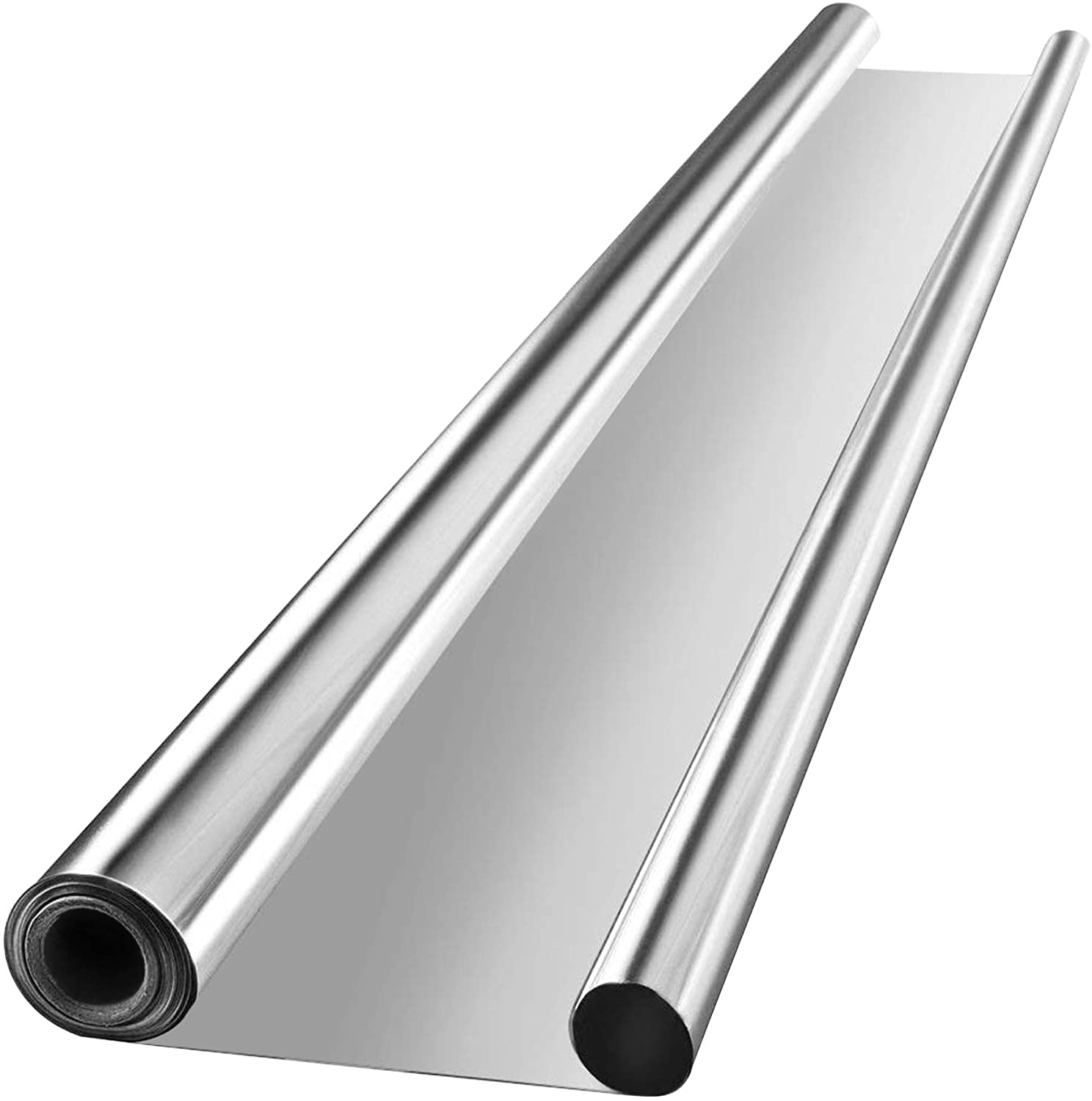
This needs to be addressed because beginners constantly ask about it. Regular kitchen aluminum foil is a poor choice for grow room walls. It wrinkles badly, creating intense hot spots that can burn plants. The dull side reflects about 55-60% of light (lower than white paint), and the shiny side is only marginally better but creates problematic focused reflection. It tears easily and oxidizes over time. Just do not use it. Flat white paint is cheaper, easier, and performs significantly better.
11. Diamond Diffusion Film
Diamond diffusion film has a textured surface pattern that breaks up light reflections into scattered, even coverage. Reflectivity is around 92-95%. The material is stiffer than standard Mylar, which makes it easier to mount flat without wrinkles. About $30 for a 4ft by 50ft roll. The diamond pattern serves the same function as the interior of premium grow tents. If you are building a custom room and want tent-quality reflection on your walls, this is the closest product to what tent manufacturers use internally.
Installation Tips
Whatever material you choose, smooth installation matters more than the material itself. A perfectly mounted sheet of Panda film will outperform a wrinkled sheet of premium Mylar every time. Use spray adhesive, Velcro strips, or magnetic strips for attachment. Avoid staples because they create light leaks. Overlap seams by at least 2 inches. And remember that light leaks during the dark period can stress photoperiod plants and cause hermaphrodite development. Seal every gap, especially around duct openings, electrical outlets, and door frames.


